The Parlay Illusion: Why the Biggest Payouts Often Come With the Biggest Hidden Costs
Photo: Unknown authorUnknown author, CC BY-SA 4.0, via Wikimedia Commons
The Screenshot That Started It All
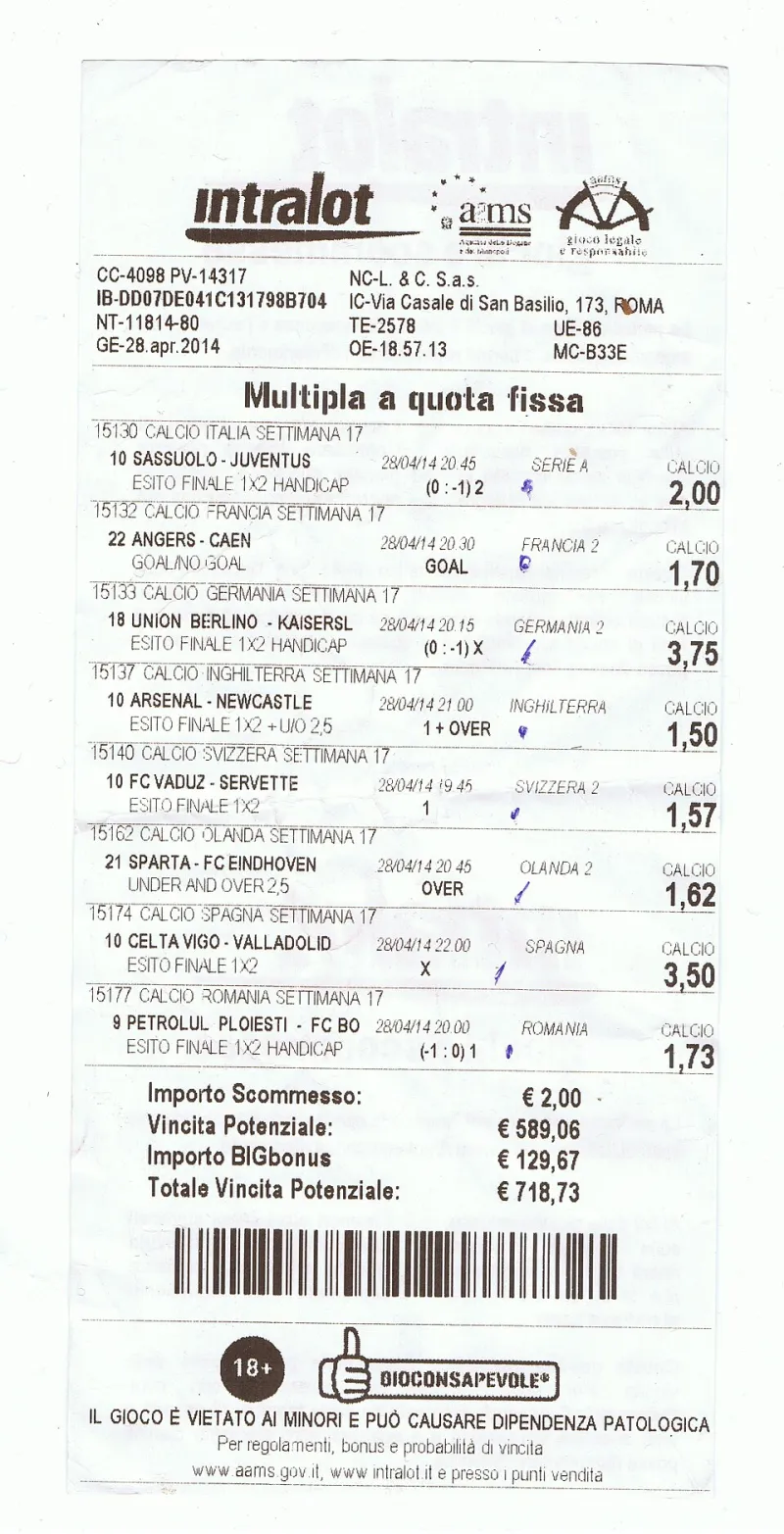
You've seen it on Twitter, Reddit, your group chat. Some guy hits a 12-leg parlay and walks away with $47,000 off a $25 ticket. The post blows up. People screenshot it, share it, tag their friends. For about 48 hours, everyone is suddenly a parlay believer.
And then reality quietly reasserts itself.
That screenshot doesn't show the 200 times that same guy missed. It doesn't show the guy who went 11-for-12 and got nothing. It definitely doesn't show the mathematical reality sitting underneath every multi-leg bet you build on your phone at 11:30 on a Sunday morning.
At Fly88B, we're all about chasing the action — but chasing it smart. And understanding the real cost of parlays is one of the most valuable things a US bettor can learn.
The Math Nobody Posts on Social Media
Let's start with the numbers, because they're the part of this conversation that almost never makes it onto the timeline.
When you place a straight bet at standard -110 odds, the implied win probability is about 52.4%. The sportsbook's edge is relatively contained — roughly 4.5% juice on a single bet.
Now string three of those together into a parlay. Each leg needs to hit independently, so you multiply the probabilities. Three -110 legs gives you approximately a 12.5% chance of winning. The payout on a standard three-teamer is usually around +600, which implies a win probability of about 14.3%. The gap between those two numbers — 14.3% implied vs. 12.5% real — is where the book quietly takes its cut.
Scale that to five legs, seven legs, ten legs, and that gap doesn't just grow — it compounds. The house edge on a 10-leg parlay can exceed 30% in some formats. You're not just buying a long shot. You're paying a significant premium for the privilege of dreaming big.
Why Our Brains Love Parlays Anyway
Knowing the math and feeling the math are two very different experiences. Parlays are engineered — whether intentionally or not — to exploit some of the most powerful psychological triggers in human decision-making.
The dopamine architecture is real. Adding each leg to a parlay slip triggers a small anticipatory reward in the brain. You're essentially building excitement incrementally, and each additional selection amplifies the potential payout in a way that feels exponentially more thrilling than it is mathematically justified. By the time you've got six legs locked in, the emotional investment is enormous.
Loss aversion flips. Normally, losing hurts more than winning feels good. But with a parlay, the ticket cost is small enough that losing it doesn't register the same way. You're risking $20 to win $500 — the brain categorizes that as low-stakes fun rather than a financial decision with real expected value implications.
Social proof is relentless. The viral parlay win is a genuine cultural phenomenon in US sports betting right now. DraftKings, FanDuel, and every major book know exactly what they're doing when they promote those big-ticket payouts on their home screens. The advertising works because the human brain is wired to weight vivid, memorable examples over statistical reality.
Straight Bets: The Unsexy Truth
Here's something sharp bettors have known for years: the most boring path through sports betting is often the most profitable one.
A disciplined straight-bet approach — flat units, solid research, consistent line shopping — gives you a fighting chance to actually build a long-term edge. The math is cleaner. The feedback loop is tighter. You lose a game, you learn something. You win a game, the result actually reflects your process.
With a parlay, you can make five excellent selections and one mediocre one and walk away with nothing. Or you can make four average picks and one lucky one and cash a huge ticket. The outcome tells you almost nothing useful about the quality of your decisions.
That opacity is a problem if you're trying to improve. It's a feature if you're just trying to feel the rush.
When Parlays Actually Make Sense
This isn't an anti-parlay manifesto. There are legitimate use cases, and pretending otherwise would be dishonest.
Correlated parlays — where outcomes are statistically linked, like a quarterback throwing for big yards AND his team winning big — can offer genuine value in certain formats. Same-game parlays, when constructed thoughtfully with correlated outcomes, shift the math in your favor compared to independent-leg parlays.
Small recreational allocation makes complete sense. If you set aside 5-10% of your weekly betting budget specifically for long-shot parlay action, you're buying entertainment with clearly defined limits. That's a completely reasonable approach, as long as the allocation is intentional and the rest of your bankroll is managed seriously.
Teaser strategy — a variation on parlays with adjusted lines — can actually produce positive expected value in specific NFL scenarios when applied with discipline. This is a legitimate edge that sharp bettors have exploited for years.
The problem isn't parlays in the abstract. The problem is when parlays become the primary vehicle for your betting activity because the payouts feel exciting and straight bets feel boring.
A Framework for Deciding What You're Actually Doing
Before you build your next ticket, run through this quick mental check:
- Am I making this parlay because the legs are genuinely strong, or because I want a big number at the bottom?
- What percentage of my weekly bankroll does this ticket represent?
- If I lose this, will I feel the urge to immediately build another one to chase it back?
- Am I correlating these legs intentionally, or just stacking games I like?
Honest answers to those questions will tell you a lot about whether you're betting or just buying dopamine.
The Real Highlight Reel
Here's the thing about those viral parlay wins: they're real. People do hit them. The 15-leg monster does occasionally cash. But the highlight reel only ever shows the ending — it never shows the thousands of tickets that funded the one that hit.
The bettors who actually grow their bankrolls over a full season aren't usually the ones posting screenshots. They're grinding straight bets, shopping lines, tracking results, and treating every wager as a data point in a long-run strategy.
That's not as shareable. It doesn't go viral. But it's the actual game underneath the game — and at Fly88B, that's the action worth chasing.