Check the Forecast Before You Check the Odds: Weather Handicapping for US Bettors
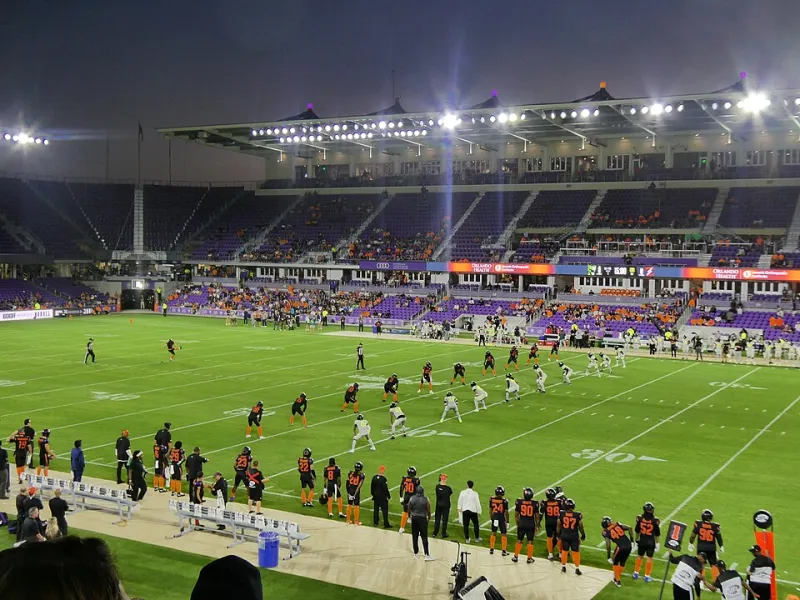
Photo: Keiteay, CC BY 4.0, via Wikimedia Commons
Every Sunday morning in the fall, millions of American bettors do the same thing: open the app, scan the spreads, check the injury report, and fire off their picks. What they skip is the one piece of information that's free, public, and posted days in advance — the weather.
The forecast isn't just something your local meteorologist mumbles through before the game. It's a handicapping tool, and in certain situations it's one of the most powerful ones available. The books know this. Sharp bettors know this. The question is whether you do.
Why Wind Is the Undisputed King of Weather Betting
If you learn one weather-related lesson, make it this: wind matters more than rain, more than snow, more than cold. Sustained winds over 15 mph start to compress scoring in football. Over 20 mph, and you're looking at a game where field goals become coin flips and deep passing attacks get grounded.
Think about what wind actually does. A 45-yard field goal into a 20 mph headwind plays more like a 55-yarder. Quarterbacks who live on the deep ball suddenly can't complete it. Punting becomes a strategic mess. The total drops for a reason — and when the number doesn't drop fast enough, that's where the value lives.
Chicago's lakefront stadium is the classic example. Winds funneling off Lake Michigan have been bending kicks sideways for decades, and veteran bettors have quietly targeted Bears games in November and December for just as long. Coastal stadiums in Foxborough, East Rutherford, and Cleveland can get similarly ugly late in the season.
The key isn't just knowing it's windy. It's timing. Totals often get adjusted by the time kickoff rolls around, but there's a window — usually a day or two after the line opens — when the market hasn't fully priced in an incoming front. If you see a total sitting at 48 with a forecast calling for sustained 25 mph gusts, you've likely found your edge.
Altitude: The Denver Problem Nobody Accounts For
Mile High Stadium sits a full mile above sea level, and that changes football and baseball in ways that don't show up on a stat sheet.
For visiting football teams, the altitude saps stamina in the fourth quarter, when tired legs matter most. Kickoffs and field goals fly several yards farther, which subtly shifts coaching decisions. For baseball, the thin air in Denver turns routine fly balls into home run threats and breaking balls into flat, hittable pitches. Coors Field's run environment is so extreme that oddsmakers treat it differently from every other park in America — and bettors should too.
The underrated angle here is the road team's schedule. A squad flying in from sea level on a short week deals with the altitude worse than one that's had time to adjust. Check the travel itinerary, not just the standings.
Domes, Roofs, and the Indoor Illusion
Not all weather handicapping is about storms. Sometimes it's about the absence of them.
Dome teams — think Detroit, Atlanta, Las Vegas, New Orleans — play in pristine conditions every single week. Their passing games and kickers operate in a controlled environment. When one of those teams travels to an outdoor stadium in December, that's a genuine variable. A dome team playing at Soldier Field or Lambeau in January is dealing with something they haven't faced all season.
The reverse matters too. A cold-weather team hosting a warm-weather or dome opponent in brutal conditions has a quiet, structural edge that never shows up in the injury report.
Baseball's Hidden Weather Market
Football gets the headlines, but baseball might be the sport where weather handicapping pays best, because so few bettors bother.
A few things to watch:
- Wind blowing out at a hitter-friendly park can add 10-15% to run scoring. Wind blowing in can quietly suppress totals even in slugger havens.
- Humidity matters. A humid night makes baseballs slightly harder to hit far. Dry, thin air — hello, Arizona and Colorado — does the opposite.
- Temperature swings in early April and late September create totals that haven't caught up to conditions. Cold-weather games in the Northeast in April are notorious for unders.
- Rain delays can flip a starting pitcher's effectiveness. A starter sitting through a 90-minute delay often comes back diminished, and the bullpen gets taxed in ways the line never anticipated.
Your Pre-Kickoff Weather Checklist
You don't need to be a meteorologist. You need a routine. Run through this before betting any outdoor game:
- Check the forecast 48 hours out and again on game day. Forecasts change, and so should your read.
- Separate sustained wind from gusts. Gusts are dramatic; sustained wind is what actually shapes a game.
- Compare the current total to the weather. If conditions scream low-scoring and the total hasn't moved, the market may be slow — or you may have found value.
- Factor in the teams' styles. Wind hurts pass-heavy offenses far more than run-first teams. A bad weather game featuring two ground-and-pound squads is less distorted than one with two aerial attacks.
- Don't overreact. A little rain isn't a reason to bet an under. Professionals fade obvious weather overreactions all the time, because the public bets the forecast instead of the number.
That last point deserves repeating. By the time everyone can see the storm on radar, the line has moved. Your edge comes from being early and being measured — not from being loud about the obvious.
The Bigger Picture: Weather as One Input, Not the Whole Bet
Here's the honest caveat: weather alone is never a reason to bet a game. It's a tiebreaker, an adjuster, a lens. A 25 mph wind doesn't make a bad team good. It just changes what a reasonable total should look like — and whether the number in front of you makes sense.
The best US bettors treat conditions the way they treat injuries and rest differentials: one more layer of information stacked on top of fundamentals. Do that consistently, and you'll find yourself on the right side of a handful of games every season that the casual public gets flat-out wrong.
So next weekend, before you lock in your card, do the thing your grandfather did before a tailgate: look outside. The sky might be telling you something the odds haven't caught up to yet.